My last few postings have been circling around the inherent existence of metaphors in myths, religions, linguistics, numbers, sociology, psychology and so forth. But understanding the existence of metaphors embedded in a multitude of fields in reality is only one part; the other, logically being its implications in real world dynamics.
I recall several years ago talking to a devout Christian about Hinduism and their pantheon of deities and the various incarnations of each and what not. She suddenly stopped me and emphatically disagreed that the religion is inherently flawed. I initially assumed she figured Hinduism was flawed because they don't believe in Jesus (though many sects of Hinduism consider Jesus to be an incarnation of Krishna). Turned out that she simply did not understand how their entire vast pantheon is really the incarnation of one deity. I remember her saying something like : "It just seems so silly that Krishna, Siva, and Brahma are all Vishnu. Why would they be different gods and yet the same god?" I explained to her that she already understood the concept, and that the same concept existed in her own faith as well : God, Jesus, and the Holy Spirit are all separate and the same. And that is how two people of differing beliefs (though I am not Hindu, I just like studying religions) made an accordance.
Essentially the idea of the Christian Trinity was already a concrete concept to her. Where the Hindu pantheon was rather preposterous and unfamiliar. Her own concept of the Trinity was used a metaphor to understand the Hindu pantheon. Though she doesn't have to convert to Hinduism she now has an understanding of their belief structure.
The question that really exists right now is : is it necessary for social hatred to exist? Exactly what good does it produce? We all have roughly the same idea on many thing, just same ideas are a little different from another. For instance, is it necessary for Communists and Democracies to hate one another? In their own way both believe in equality of individuals, albeit each has different means of construing this equality. Is it necessary for Red Sox fans to hate Yankee fans? (Something I have to deal with everyday). Both groups like football! What exactly is the problem? Or is it necessary for Mac and PC users to hate one another? They both use computers, but the OS so happens to be a bit different.
But a funny thing arises in many social interactions when context of origin is removed, i.e. away from homeland : differences tend to disappear. A Yankee fan may hate a Red Sox fan at a sports bar in New England, but if the two encounter one another in Germany they will probably buy one another drinks and happily discuss football. Sometimes context is not necessary at all. For instance, anytime I encounter another Patrick we tend to act like good buds, though we may have just met (this happened at work the other day).
That is the gripping aspect of metaphors : they allow us to achieve an understanding and accordance with something that is unfamiliar or foreign to us. Metaphors can do that because of a certain similarity between the unknown and known, and the unknown is made agreeable via a concrete concept, i.e. the metaphor. A Yankee fan may be foreign and, therefore, disagreeable. But once we are no longer in America we realize that that little difference doesn't matter, we are both American and we like football! (I must stress here that I don't actually like football).
Metaphors allow us to have flexible notions of reality and, therefore, a flexible world view. They allow for mutual understanding, as the function of metaphors are to provide an understanding of the unknown through something that is already known. They potentially allow us to understand one another, regardless of our differences.
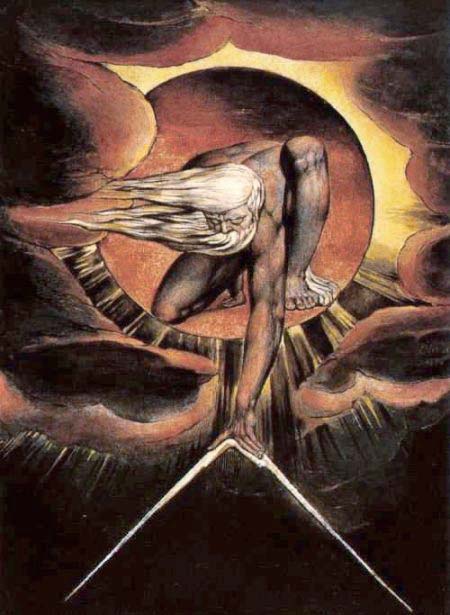
Inflexibility in our conceptions of reality typically results in mutually indoctrinated hatred and looks a little bit like :
Sunday, January 2, 2011
Etymology : Do You Understand?
Given my current research in linguistic metaphors lately, one thing still troubles me : are the metaphors of word roots, e.g. etymologies, inherently structured into our common language? That is, the etymologies of word, which are often very different from how we actually use the words themselves, do they dictate a metaphorical understanding of reality. Let me give a few examples :
The word renovation comes from the Latin renovatio, which means "rebirth" and is where we get the word Renaissance. Here I would suggest that the etymology of the word corresponds to the manner in which we use the word in common speech. If a family decides to renovate their house, we usually mean "fix up the house", which usually entails new carpet, cabinets, getting rid of that ugly 1970s wallpaper and giving the outside a fresh coat of paint. But common speech is incredibly subjective and typically dependent on experience and cultural background. So once the house is reborn it does present itself with new life, as if it had a renovatio.
The word invent comes from the Latin invenire, which means "to find". Here I would suggest that the two are similar, but to our common speech the word and its root seem to have distinctly different properties. To say "I invented that machine" and "I found that machine" seem inherently distinct. To invent something seems to us to be created ex nobo, while to find something is to discover something that already existed. But they are very similar and they correspond in everyday speech. For example, when a new institution is created it is often stated to have been founded in such and such a year. This founding corresponds to the notion of invenire as it already existed and just had to be found.
The word garden comes from the Latin gardinus meaning "enclosure". Once again, I would suggest the two are some what similar, but our conception of the two in common speech are distinctly different. We typically think of a garden as a place of vegetation, often where food is grown. A synonymous word to garden is paradise, which, because of cultural reasons (i.e. Christianity : Garden of Eden) we consider the two be similar. Consequently paradise comes from Arabic pairidaeza, which is a compound of pairi- "around" + diz "form, wall". We would consider the two to be distinctly different in the case of paradise, as paradise is usually thought of being a place of wonder, relaxation, and pleasure (Eden being Hebrew for "pleasure"). Though the word and the root seem to be two different things, we naturally impose boarders on things that do not have boarders. When we do make a garden we establish some kind of boarder to it, such as a line of bricks, or raise the soil behind retaining walls, or simply change the ground cover (i.e. mulch or straw). I would suggest the word and its root to be similar, but they are more dissimilar than they are similar.
Other words tend to be vastly different from their etymology. The word genius, which is Latin and means "spirit" and is synonymous with the Greek daemon. But it does not mean spirit in the sense of a soul or ghost, but rather that we each have a genius. This is profoundly different from our concept of genius, in which we usually say "You are a genius", rather than "You have a genius". The genius was thought of as a sort of personal god, a deity that attended one person and one person only, and was that person's link to higher deities. This was the case in Mesopotamia, as genius comes from the Arabic genii (as in the genie in the lamp). The genie was thought of as each person's individual deity, sort of like a guardian angel, and were often represented as small figurines. The genius was typically thought of as a sort of muse, which further confuses the matter. The word museum is a compound : muse + um, or "place of the muses", as museums were filled with the art and beauty inspired by the muses. No one was ever thought to to invent anything on their own, but rather a muse or genius or daemon or genie gave them the idea. So no one could be blamed for anything, as they were commanded by the gods of what to do, thus were not responsible for their actions. This is probably due to the bicameral mind, and they could not conceive of ideas ex nobo on their own. I suggest that our conception of genius is vastly different from what the term originally implied.
For more on this idea of genius watch Elizabeth Gilbert's (yes, she wrote Eat Pray Love) lecture at TED Talks : http://www.youtube.com/watch?v=86x-u-tz0MA ... though the problem with her idea is that we cannot return to the idea of having a genius, as the bicameral mind has disintegrated in our point in history.
The final word I wish to end this with is understand, which seems like a basic word as it is a composite of two English words : under + stand. When seen like that, what is that suppose to mean. Our conception of understanding implies that the information given to us has been received and interpreted correctly and that the information was "grasped" (metaphor). Understand seems to be one of those words that is a bit difficult to define, as mentioned before. The process of understanding should be described and understood first : person A speaks and person B hears. Let's say Person A commands person B to do something, in which case person B obeys. The process of listening is similar to obedience, as one has to block out everything else that is going on and hear attentively. The term obedience comes from the Latin obedire, which is a compound of ob + audire, which means "to hear while facing [someone]". So hearing involves a hierarchical relationship in which one hears and obeys, while the other commands (refer to Julian James's Origin of Conscious in the Breakdown of the Bicameral Mind for further implications of this process). Obviously, whoever is hearing the command would have to understand the person higher to them in order obey. This would probably be the root of the word understand. Let's say a king, while sitting on his throne, tells his servant to run an errand. The servant would hear and obey, thus standing under the king. If the interpretation of the word is correct, then its origin is probably due to the fact that kings and gods sat on thrones and everyone else stood below them. I suggest that our conception of this word is vastly different from its roots.
So do we understand the etymologies of words in our everyday speech? For the most part, I would say yes, as most words we use are similar to their origins, as is the case of renovation, or garden, or invent. But there are several words which are vastly different from their origins, such as genius, or portal, or understand, or paradise, or am.
Hammurabi being given the Code from Marduk:
Do you understand?
I under + stand.
Saturday, December 25, 2010
Sacred Numbers of Speech : 1, 2, 3, & 4
I had a long walk home this evening because the Boston bus system stopped running early on Christmas. But after a long night of debating things from science, mysticism, energy resources, unsolved problem in mathematics, and Tolkien, I had time to think about why certain numbers were sacred during this walk. For a number or a geometry to be considered sacred it must be found naturally and ontologically in according individual instances. For example, Platonic solids are sacred because one solid is a duality of another, such as the icosahedron is a dual of a dodecahedron.
But what about certain numbers? For instance, the number 2 is sacred, but why? There are two ways to find its significance as a number : ontologically and in speech patterns.
Let's begin with 1. One is a singularity, non-polar, and autonomous. This is obviously sacred as 1 exists naturally and ontologically. My solipsistic existence ontologically gives rise to a singularity. It also exists as a manner of speech, such as the autonomous statement : "I am."
The number 2, on the other hand, is different. Ontologically, referring to a singularity automatically infers that "I" is a separate entity from that singularity, thus creating a duality. The duality occurs naturally as well, such as man and woman, light and dark, up and down, warm and cold, et cetera. This occurs in speech, such as if I say : "You are..." I am referring to "you" as a separate entity from myself, thus establishing a polarity of "you" and "I". Or again, if I say "He looks lonely." I am referring to "he" as an entity polar to my singularity. Therefore, the singularity is destroyed and ontologically a duality emerges.
The number 3 is not much different, as I have already used it above in : "He looks lonely." Saying this sentence to "you", a duality to myself, establishes there is trinity, or a third entity separate from "you" and "I". Even if I were saying this sentence to myself I am structuring this sentence as if there were a hypothetical second entity to say this to. So, in this instance, a trinity can emerge linguistically from a singularity.
The number 4 is the blurry bounds of where the primary sacred numbers end. 1, 2, & 3 ontologically exist to themselves, and they are prime numbers, and therefore isolated. Four is a dual-duality, that is 2 x 2. But the significance of 4 arises in our speech. For instance, if I say to you : "They are going to the movies tonight." This establishes that there is more than a trinity, and at the very least a quaternity. I am signifying that there is, at the very least, a duality that is separate from us as a duality. But, of course, these are fuzzy lines, as "they" can refer to any number more than one separate from the us. "They" could refer to five, or forty-two. Logically, all number greater than three cannot be considered important (and possibly even primary) sacred numbers due to their absence in our speech.
But this does not mean that 4 and 5 and 6 and 7 and... are not sacred numbers. 4 is sacred because it is a dual-duality. 5 is sacred because it is the number of appendages on each hand and foot, the number of retrogrades per cycle in the geocentric orbit of Venus, a prime number, and so forth. And though 5 may not be a dual-trinity (6) or a tri-trinity (9), it is a dual and a trinity (2 + 3). 6 is a sacred number, not only because it is found in nature, but it is a dual-trinity. And so the list keeps going and 12 is usually considered to be the last of fundamental sacred numbers, though there are others beyond this.
1, 2, and 3 are sacred because they are the building blocks of higher sacred numbers. But hidden in our speech we find the significance of these sacred numbers, or at the very least, what sacred numbers were primary and which ones are secondary.
Thursday, December 23, 2010
Globalization & Jesus : A Christmas Story
Jesus was not the only deity born on December 25th, nor was he the first. In fact, one incarnation of Buddha was born on December 25th, 563 years before Christ. Among the ranks of winter solstice born deities are Horus (Egypt 3000 B.C.), Osiris (Egypt 3000 B.C.), Attis (Greek 1400 B.C.), Krishna (India 5771 B.C. & 1400 B.C., two incarnations), Zoroaster / Zarathustra (Persia 1000 B.C.), Mithra (Persia 600 B.C.), Heracles (Greece 800 B.C.), Dionysus (Greece 186 B.C.), Tammuz (Greece 400 B.C.), Adonis (Greece 200 B.C.), Hermes (Rome 200 B.C.), Bacchus (Rome 200 B.C.), and Prometheus (Greece and Rome, before calendars).
So why December 25th? What is so special about this date that practically a whole pantheon of gods were born on this day? It is the winter solstice. Although our Gregorian calendars place the solstice on the 21st, the old Roman calendar, known as the Julian calendar, places the solstice on the 25th. The winter solstice is the shortest day of the year, that is the darkest day of the year, and it marks the time in which the days begin to grow longer again. This was considered a promise of spring to come and a sign of rebirth, hence why vegetative deities (namely all the above) are born on this day.
But the fact that these gods, and probably more, are born on this day is not the only coincidence between them and Jesus. Of them the following are born of virgins : Horus, Attis, Krishna, Zoroaster, Mithra, Heracles, Dionysus, Tammuz, Adonis, Hermes, and Bacchus. We could certainly compare all of these to Jesus, but let's just focus on a couple of them and their correlation to Jesus :
Horus's early father was named Seb, which is synonymous with Joseph. As a child he taught the priest in the temple. He went on hiatus for many years and when he returned he was baptized in a river. Horus had twelve disciples. He performed miracles, healed the blind and the lame, and raised the dead. Actually, he raised El-Azarus, which is synonymous with Lazarus (though originally derived from El-Osiris). He preached a sermon on a mountain. Horus was crucified and flanked by two crucified thieves. He was buried in a tomb, and three days later was resurrected. He was known as the "The Way", "The Truth", "The Light", "Messiah", "The Shepherd", "Son of God", "Son of Man" (Manson), "The Lamb of God", "KRST" or "Christ", and "The Anointed One". He was, to top it off, a fisherman and was attributed with a fish (the Ichthys).
Krishna's earthly father was a carpenter. He birth was signaled by a star in the eastern sky. He was placed in a manger. Angels and shepherds attended his nativity and brought gifts of spices. He performed miracles, raised the dead, and healed the sick, the lame, the blind, and lepers. Krishna had twelve disciples. He was crucified and flanked by two thieves. Known as "Son of God" and "Lord" and "Savior". He represents the second entity of the Hindu trinity. His disciples called him "Jezeus" or "Jeseus", which translates from Sanskrit meaning "pure essence".
Now, I personally find the accusation of Christians "stealing" from other religions to be a bit unfair. Although the Romans "stole" practically their whole mythology from the Greeks, we usually say the Romans "borrowed" from the Greeks. We might say, then, that the Christians simply united primary deities from other cultures to unify the nations under one religion. Point in fact, this is precisely what early Christianization was trying to do : to bring the world together into one belief system. Albeit, latter Christianization was far more forceful, unforgiving, unnecessarily brutal, and very violent.
Does this all sound vaguely familiar? Sure, we are experiencing it right now from the 20th Century until today in the 21st Century. It's called globalization. Globalization is the attempt to bring all nations and cultures into one political, economical, monetary, and social system. It involves incorporating the successful systems used by certain nations and rejecting the faulty systems of another. Globalization primarily tries to focus on creating a global economy that unifies different monetary systems, and often unites under one form of currency (for instance, the Euro). Social and cultural unification and adoption is usually a side-effect, though it may be intentionally by some nations. For instance, African cultures adopting American clothing styles and Oriental countries building McDonald's and Wal-Marts.
Considering how Jesus is so well tied to other deities of other nations, we can fairly safely say that Jesus, the "pure essence", was the precursor to globalization. For those who like equations :
Horus + Osiris + Attis + Krishna + Buddha + Zoroaster + Mithra + Heracles + Tammus + Dionysus + Hermes + Bacchus + Prometheus = Jesus
∴ Jesus ≤ Globalization.
Wednesday, December 22, 2010
Why Are Myths Metaphors?
Joseph Campbell went to great lengths to demonstrate that myths of antiquity are metaphors. The term myth is often used to denote a "lie", i.e. myth is often synonymous with falsehood. This could not be further from the truth. Myths are only metaphorical stories to describe an abstract concept.
Why would they use a story to describe an idea rather than just saying it? For instance, the Upanishads had an idea that originally there were no sexes, i.e. male and female, but that they were originally united and later divided. This concept is not all that unfamiliar, as it is in the Bible. Most Americans are familiar with the creation of Eve,who was rendered from Adam's rib. This meant that the soul of woman was originally united with that of man's and the soul of woman was drawn from a united state with man. What this indicates is a knowledge of unisexual beings originally capable of doing what dou-sexual entities have to do when combined (namely sex and reproduction). This is a recognition of a simple, unified state of existence and probably designates the concept of asexual organisms in the beginning of the evolutionary chain (evolution was an idea that existed in the time of the Greeks and possibly earlier, hence why the Greeks has a similar myth).
So once again, why a story instead of saying it? Abstract ideas are not easy to grasp and we often use metaphors to describe them. As discussed in the posting The Meaning of Life Malstructured we constantly use metaphors to describe abstract concepts, such as love and life. These abstract ideas are structured and explained in terms of some more objectively and concretely understood experience. One may notice that a person learning a new language often tries to describe certain complex ideas in terms of something else that they know how to say in the new language. For instance, a friend of mine from Vietnam was trying to discuss his tectonic / stereotomic idea for his building design on a pedestal. He said, "Earth is soft," then he hit his fist on the table and continued, "Table is hard. We use hard to set building on soft Earth." Children often do much the same thing to suit their curiosity.
Our ancestors were new to this condition we call "consciousness", and consequently describing their wonder for "life, the universe, everything" was structured and understood to them in metaphors, i.e. myths. This can be considered a sort of childish condition, in which our ancestors comprehended a great deal, but they could only understand it in terms of mythical metaphors.
We do much the same thing today in modern science. Scientists very rarely talk about a subject in terms of the subject alone. For instance, when we talk about the expanding universe we use metaphors and analogies to describe the idea, usually an expanding balloon. We know that the universe is not necessary like an inflating balloon with images of galaxies adhered to it, but it is a means for us to understand the concept. Really, the expanding universe is based on the interacting forces of dark energy accelerating the inflation speed faster than matter and dark matter can condense the universe. These forces are governed by thermodynamics, electromagnetic fields, and gravity. The reality of the expanding universe is too abstract for us to grasp, and, in fact, we more of less lack the formal language necessary to describe it. Thus we use a parable, an analogy, a metaphor, a myth to describe these new and highly abstract concepts.
Until these concepts are understood in their own terms and we have a language to describe the terms of those concepts, much of what we conceptualize as truth will remain mythic. And thus, the myths survive. They are our arts, our businesses, our religions, our politics, our education, our sciences, and, most emphatically, our lives.
Monday, December 20, 2010
Ambivalence : Daedalus & The Continuing Archetype
It is truly a wonder to gaze at the night sky and witness the incredible destruction and creation of the stars; the dance of death. It is also a wonder to view the beauty of poisonous frogs and flowers, which evolved their mechanisms of death to avoid death. It appears to be a contradiction in our metaphors to comprehend beauty as something destructive. But this is the very ideology of Hinduism. Kali, the black goddess, whose prime altar is the battlefield. But Kali is only an incarnation of the same deity as Siva (the destroyer) and Brahma (the creator). They are dichotomous and, yet, synonymous. It is only through death and destruction that creation can begin. With every beginning there is an end. This is the very nature of the architect, who must destroy to create. This is the very nature of God and of Creation. This is ambivalence. Not indifference, but disregarding the necessary means to achieve something greater than the costs.
I have spent quite a bit of time analyzing various pop-culture characters and the archetypes they follow. One character that took me quite a bit of time to unravel is Dr. Gregory House. Now, I met Hugh Laurie in New York City a couple of years ago (yes, he is just as cynical in real life as he is on the show), I bought him a beer, and he cued me in on a little trivia about the character House : he is based on Sherlock Holmes. They both have one close friend whose name begins with W and ends in -son (Wilson - Watson). They are both addicted to some drug (House - Vicodin, Holmes - cocaine). They are both geniuses in their fields. They both love puzzles. Both are antisocial and egoist. House's apartment number is the same as Holmes's street address (221B). Watson walks with a cane, House walks with a cane. And the phonetic synonyms of "House" and "Holmes".
The question that had me pondering was : what is Sherlock Holmes's archetype? Then it struck me in my mythology studies, he is based on Daedalus. Daedalus is the Greek mythological character who built the labyrinth to house the Minotaur and the wings for him and his son, Icarus, to escape imprisonment in the tower of King Minos. Now, we often associate Daedalus with being an artists, inventor, and architect (hence the artist periodical Daedalus). Yes, he was so, but he was of the most unusual sort. What he designed, built, and invented were often monstrosities, and the consequences of his inventions were devastating. The Labyrinth was to house a monstrous child of Zeus and King Minos's wife, which adolescents were fed to. The wings of wax resulted in the death of his son when Icarus flew too close to the sun.
The consequences of Daedalus's inventions were of no concern, but only that such an invention could be achieved. This is the nature of House, whose indifference towards patients and colleagues is to no avail in his pursuit of solving the diagnosis. It is the Daedalus archetype that is coherently found in the destructive dance of the stars and in the deadly evolution of poisonous species. It is the ambivalence of nature and the universe that creates the wonders we experience. This natural indifference towards the consequences is what has achieved the greatest marvels (and even very small ones) we experience.
I am here reminded of where this Daedalus figure enters contemporary industrial society : science. I recall the great debate of stem cell research, and the arguments of "having to abandon the research", or "is it God's will?" "What is the cost we have to pay?"
Is human life worth the cost of human life? Must we take life to save life? We say no, but we always forget the military, were we take lives to save lives, albeit this is under a different context. The Daedalusistic ambivalence has apparently lead to curing paraplegics, and most recently curing HIV. Earlier this month it was reported that the injection of CCR5-mutated stem cells has cured at least one individual. Of course, this is not a practical means of curing AIDS, as only a very small percentage of patients meet the criteria for such an procedure, as well as a small percentage of donors can produce the stem cells need. But scientists have made a major breakthrough in preventing the propagation of this fatal disease that has plagued us for almost 40 years now.
So are we justified? Do we need to be justified? Will ambivalence destroy us or propagate our existence? It is natural that all things must die, and, likewise, death augments life. With destruction comes creation. With more destruction comes more creation.
"Are you justified in taking life to save life?" -The Great Debate, Dream Theater
Sunday, December 19, 2010
The Mind Of God
Several decades ago Stephen Hawking began his search for the Mind of God. He works through this process and how to realize it in his book A Brief History of Time, and his last sentence of the text reads :
"If we find the answer to that [the unified field theory], it would be the triumph of human reason - for then we would know the mind of God."
Right there, in that very sentence, he reveals the underlying component of understanding this mind : human reason. This mind has been referred to by many names in the course of history. Timothy Leary called it the Universal Mind; William Blake called it the Doors of Perceptions; Aldous Huxley, using Blake's term as well, also called it the Mind at Large; the Yogis of Hinduism call it Universal Consciousness; Carl Jung called it the Collective Unconscious. All these names refer to the underlying structure of everything we comprehend.
The problem is for a mind to realize that it is. The very fact that we say I am speaks for this idea. This is what is referred to as a sentient being, something that actively recognizes and comprehends itself as a solipsistic entity, and through that conduit of the self constructs a reality to navigate external stimuli. This is the very nature of human reason. With reason we comprehend and structure our reality. A computer is not a sentient being because it cannot realize its own underlying processes that it uses to construct its reality, that is, its enslavement to humans, albeit these days we are trying to help computers to do so. I think, therefore I am.
The fact that we can and do comprehend a great deal about the structure of the external stimuli to ourselves, that is we understand, as well as can predict the actions, of the universe and our environs. This very comprehension is what was used to establish the structure of the universe. The evolutionary process of natural selection never intended for us to comprehend how the very small works, nor the very large. Natural selection only intended for us to understand the middle scale. We did not evolve to understand the sum of all histories or dark matter, nor the beginning of the universe or gravitons. But we do, or are at least very close to understanding it.
The debate for God's existence aside, human reason is the Mind of God. It is our ability to structure a reality from dualities : male - female, light - dark, up - down, inside - outside, good - bad, et cetera. This was the gift God gave us with the Fruit of Death; the Tree of Knowledge God tempted us like children to take part of. As the serpent said, "For God knows that when you eat of it your eyes will be opened, and you will be like God, knowing good and evil."
We have the Mind of God.
Subscribe to:
Posts (Atom)